

Learning to Live Together: On Transience and Community Care at ZA
Hey everyone, my name is alice and I'm excited and grateful to be managing the farm journal for the next few months! I hope I can live up to the amazing writers who have come before me in this project!
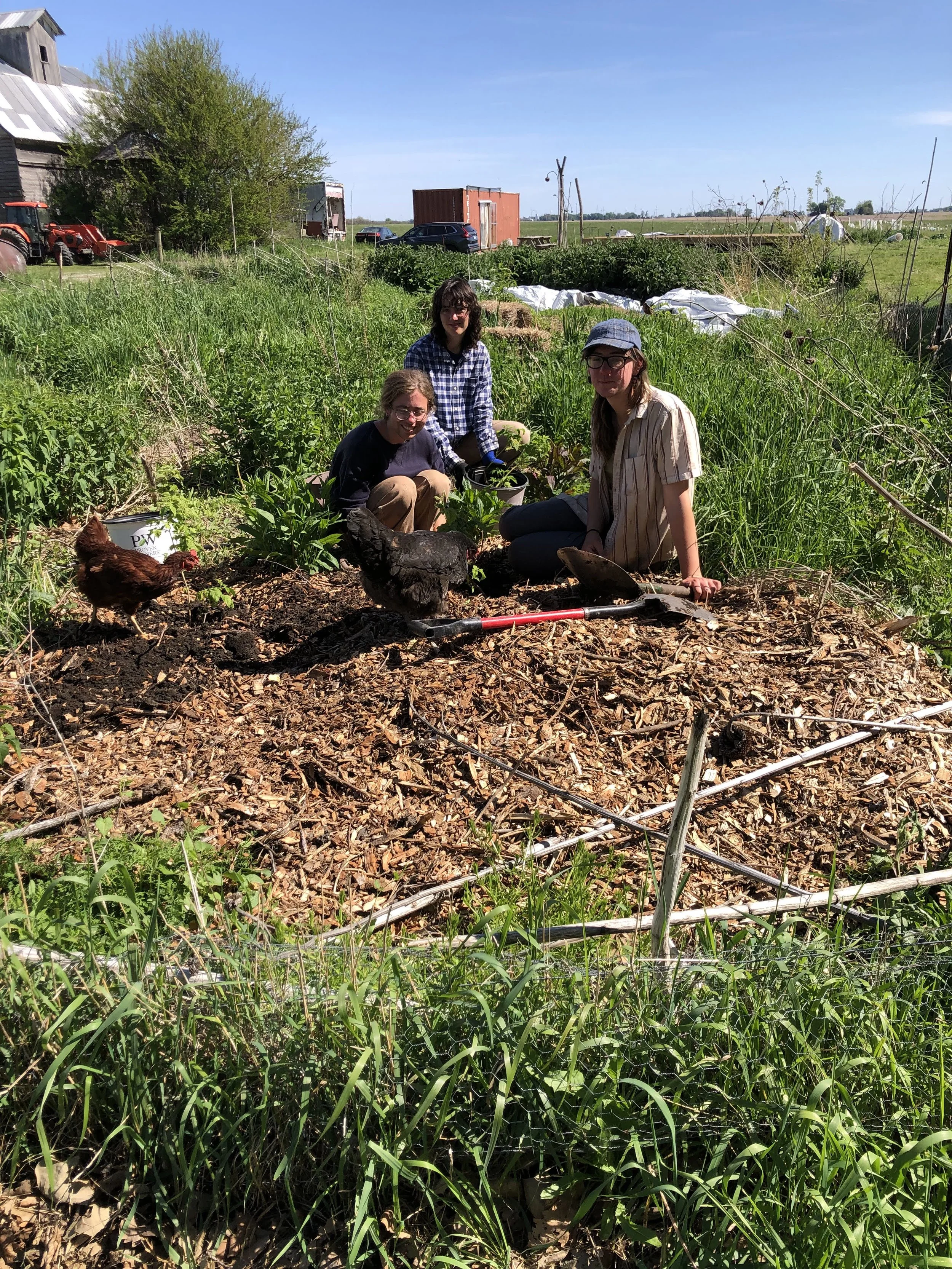
Sky, Acacia, and alice in the Strawberry Forest garden.
Zumwalt Acres has always been a space full of transience; a space with high turnover. People come in and out, creating changes and being changed. The cultural and material qualities of the space have been shaped by this transience, and by everyone who's set foot on this land since this project began (and before). ZA is a project that has been and is being collectively built by an ever changing cast of characters.
This transience is a beautiful exercise in communal values, but can also be challenging at times, meaning that we are often saying goodbye to people who we've formed deep relationships with and who have learned our farming systems. We recently said goodbye to Claire Pryor, a beloved team member who's been at the farm since Fall 23'. Not only is Claire a deeply valued member of our community, but she is also an incredibly dedicated and hard worker whose commitment kept our oyster mushrooms in production last year. With her departure, we are shutting down mushroom production this summer because there is no one else who feels up to the task.
We had a full day of picnicking and playing games to commemorate Claire's time at the farm, as well as a hilariously fun murder mystery night designed by Patricia. The events also felt like somewhat of a sendoff for Bec and Patricia, who will also be leaving the farm in the next few weeks. Bec has been here almost a year now, and Patricia has been part of our community for five years! Both of their absences will be noticeably felt in the community, and their losses grieved. Though it's hard to lose community members, it feels like a natural part of the cycle here. This way the space feels consistently fresh and revitalized, and there's an abundance of perspectives which have the possibility to deeply shape the project.
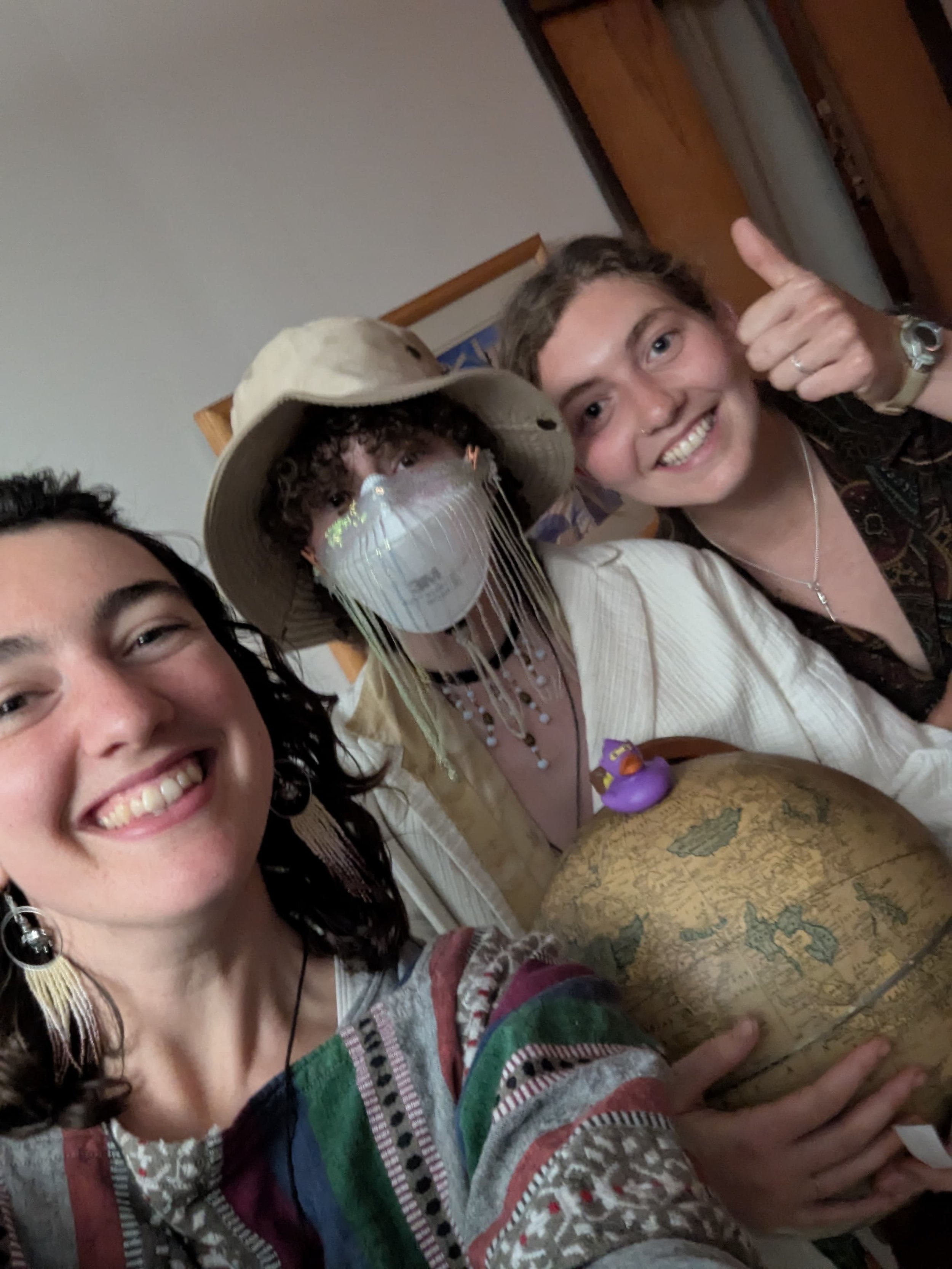
Acacia, Bec, and Claire at the murder mystery night!
Grief and loss also aren't the only parts of transience, and with the departures come the arrival of new fellows, namely myself and Sky! We'll both be here until at least November, helping to tend the land and community of Zumwalt Acres. This is the first time that there have been two season long fellows, and we're excited to see how it will change the culture of the farm. Another exciting new arrival is Frances June, who arrived at the end of April for a month-long artist residency where they'll have space to work on their upcoming album. As part of the residency they'll also be performing a set on our recently re-constructed outdoor stage.
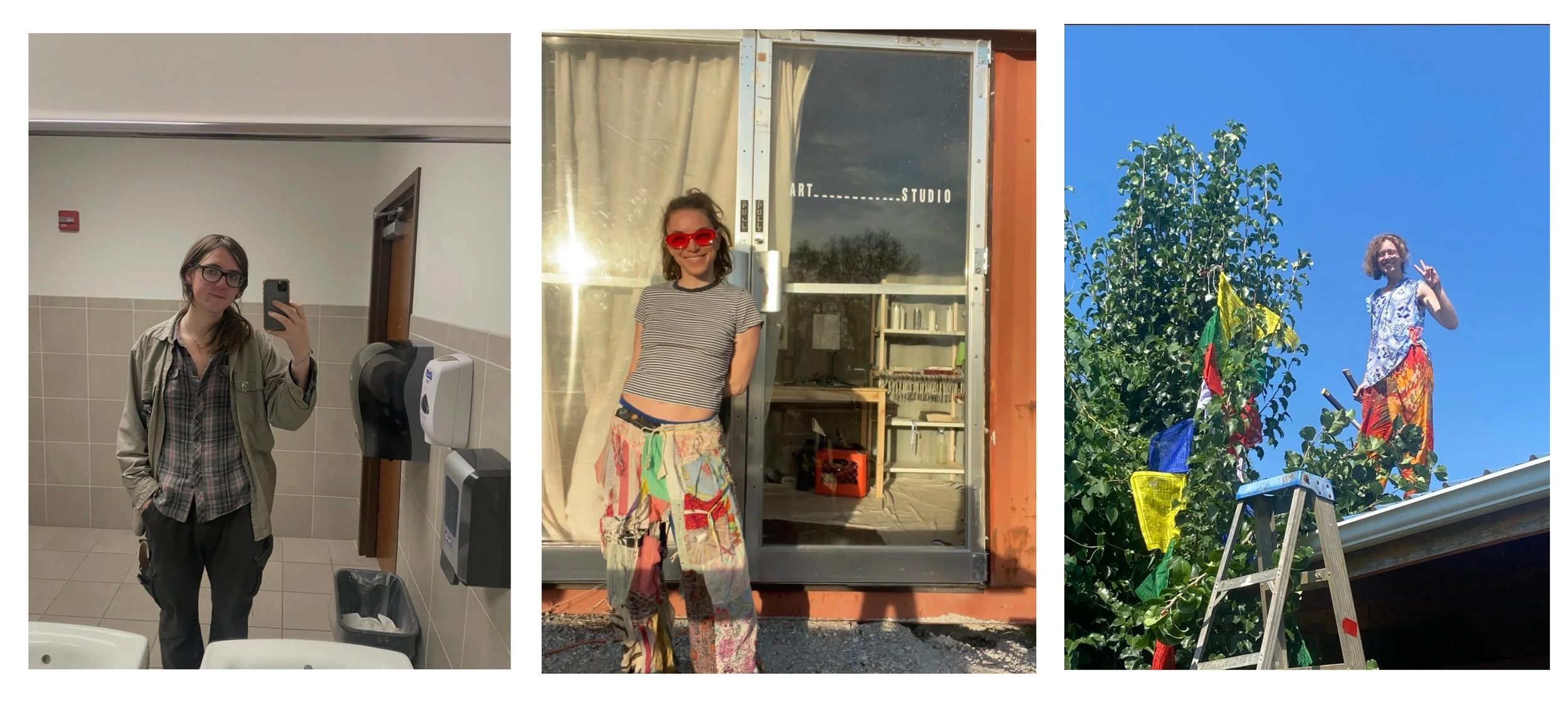
Alice, Frances, and Sky
Upkeeping community care through transience requires constant learning and re-learning, and as part of our arrival here Sky and I have been getting a series of orientations on everything from the kitchen clean cycle to the history of the land. We're each learning the history and systems of the community through a combination of presentations and one on one teaching moments.
As I started working here, I learned that farming and domestic labor are shared (to the best of our ability) equally among all community members. We meet daily to discuss what needs tending and decide who will be doing what task. We do our best to make sure everyone's needs are met and they feel good with the work they're doing each day, but of course there are some unpopular tasks that need done. It hasn't ever felt forceful to me though, I always feel a sense of autonomy with what I'm doing throughout the day, and I feel empowered to communicate if I'm really not feeling up for a specific task. The group has a lot of care and trust for each other that really shines through as we figure out how to care for the project's needs and our own.
During Monday meetings, we list the farm labor for the week, talk about the week's logistics, and assign cooking and cleaning shifts. We eat two collective meals a day; lunch and dinner. Each meal has 1-2 chefs and 2-3 cleaners. Breakfast is most often leftovers in the fridge, though sometimes someone will end up making a big pot of oatmeal or a few eggs to share. In addition to these consistently rotating chores, we also each have a few chores that we do for months/weeks at a time like mopping the kitchen, cleaning the living room, or putting away dishes from the dishwasher. Through this collective care for each other and our shared spaces, we grow closer and learn what it means to live shared lives.
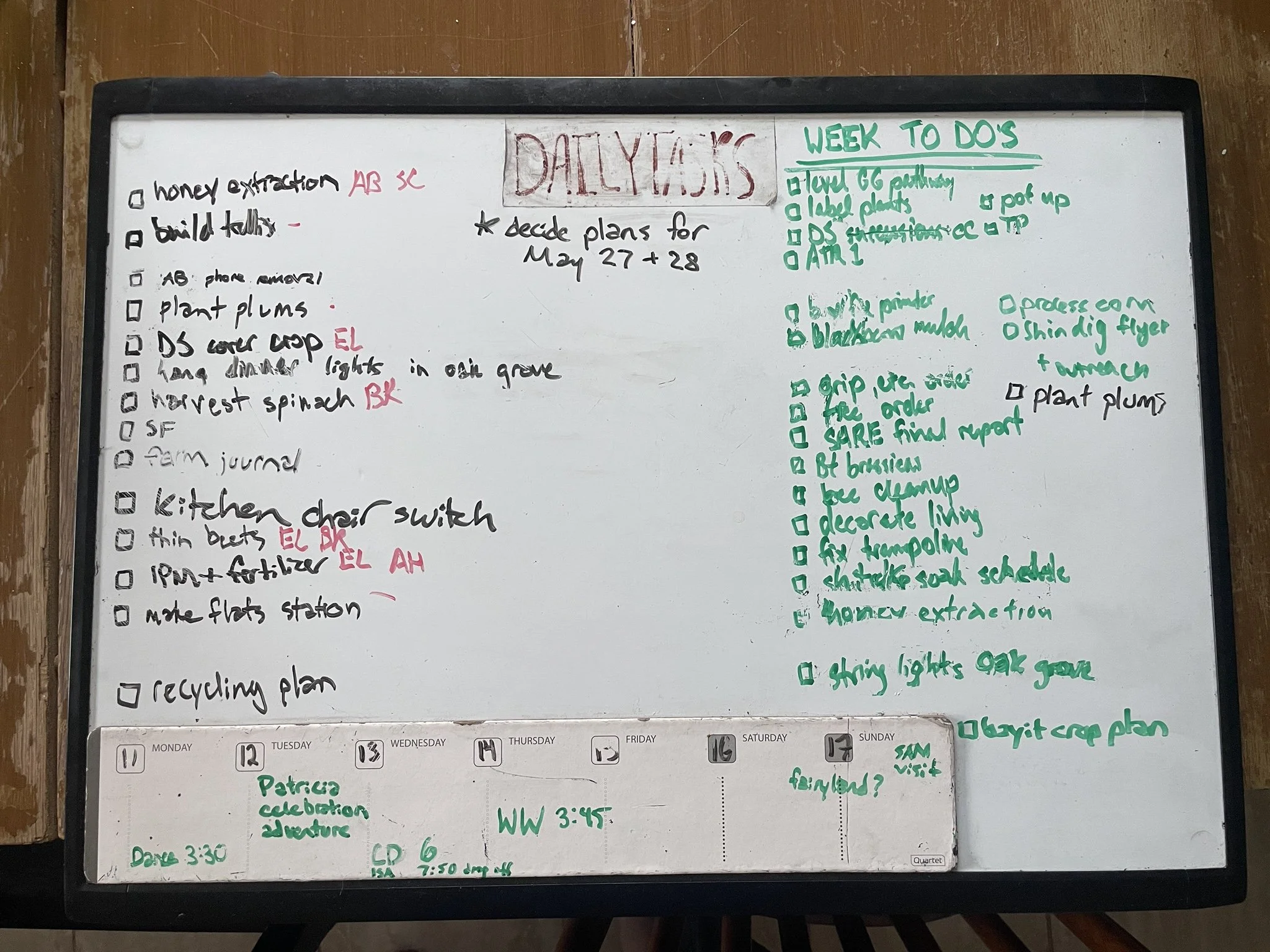
Our daily + weekly task board.
Another important community care system is Weekly Weeds, a meeting that happens once a week for us to check in with each other practically and emotionally. We start by each sharing how we've been feeling and what we've been working through. These check-ins are a deeply important part of living together, allowing us to keep track of each other's emotions and create a sense of interconnectedness in the community. Weekly Weeds is also a space where issues people are having can be brought up, and systems can be collectively changed. For example, someone might mention that they've been finding hair in the shower drain, or that they would like morning meetings to be more structured. This means our community systems and norms are also transient and fluid.
In addition to getting oriented to the labor systems, we've also been learning about (and helping to create) Zumwalt Acres' values, culture, and history. We've had a few different structured orientations where we've all sat down together and had this context explained to us, often with opportunities to jump in and name what's feeling exciting or what we want to see more of. Through these collaborative sessions we're able to facilitate learning and care for the project and about each other.
We were first introduced to the history of the land that we are currently living on, focused primarily on the original inhabitants of the Great Lakes region: the Potawatomi, Ocethi Sakowin, Kickapoo, Kaskaskia, Peoria, and Myaami peoples. These tribes, along with hundreds of others, were forcibly removed from their ancestral homelands through the settler colonial project of the United States. As non-indigenous, primarily white people living on this land we are inherently upholding this legacy of colonization.
We talked about what it means to steward stolen land, and if there is a future where part of this project can include giving land back to the people it was taken from. I was grateful to hear that community care is a value that the stewards of this project extend onto Indigenous folks, and even happier to hear that we are consistently donating food and labor to the American Indian Center, a group providing cultural, social, and educational resources for Indigenous folks in the Chicagoland area. It was a gift to spend an afternoon harvesting ramps from our woods to send them for a dinner put together for elders in their community. Despite our work, the wounds of colonization run deep, and we are still learning together how we want and are able to be in relationship with the people whose land we are on.
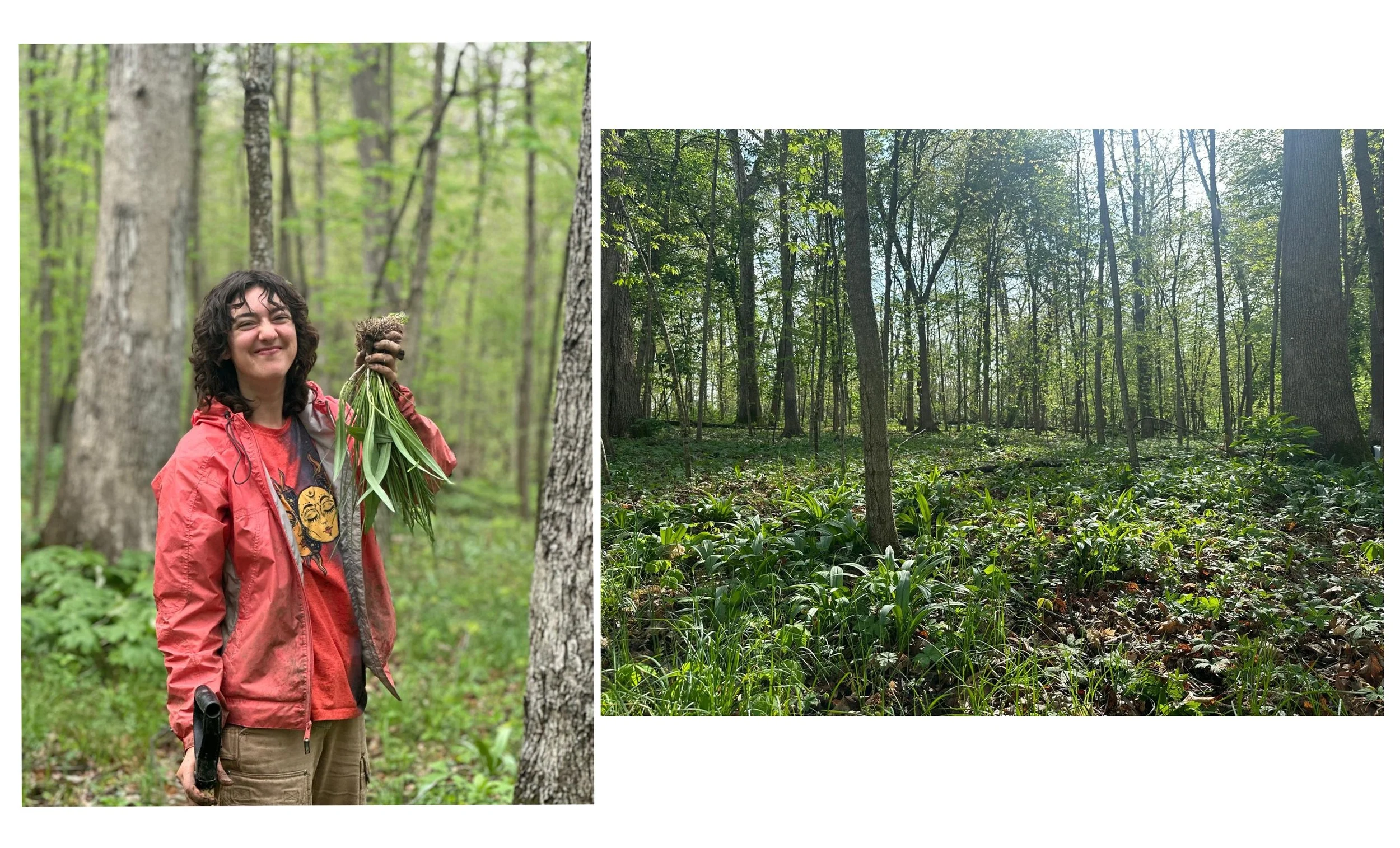
Gathering ramps from the forest!
We learned about how the project of ZA is working to be caring for the ecological community around us. The Zumwalt family farmed this land for 6 generations, and now some of the family members have decided to start this regenerative project with the hopes of creating agricultural systems to help heal this land which has been so deeply scarred by monocropping and industrial farming.
We are doing small scale vegetable farming that incorporates experimental research in agroforestry, perennial crop systems, regionally adapted crops, and seed keeping. In addition to the small-scale hand-farming that comprises the bulk of our day to day work on the farm, we are also finding ways to be in conversation with the conventional agriculture systems that dominate so much of the land and culture around us. One of the main research projects here is a joint effort with Yale University on the potential of a material called basalt to replace limestone as a soil ph balancer in industrial fields. basalt has qualities that could turn industrial fields in carbon sinks, and provide other soil and environmental benefits.
During our values orientation we learned that ethical ecological stewardship rooted in Jewish values is the mission of Zumwalt Acres. The group learned about and discussed Zumwalt's core values of care, humility, community, listening, stewardship, perenniality, and abundance. We were also introduced to the long term visions, which include empowering the next generation to transform our food systems, contributing to a Jewish diasporic land-based movement, demonstrating midwestern agroforestry, and cultivating land-based community. I feel grounded in our values and visions, they are deeply rooted in care for each other and the land in the present moment, while also courageously imaginative of what could be possible for the future of agriculture and community.
Each season the group discusses questions to collectively hold during our time together, another transient thread that shapes the community. We were simultaneously inspired by the questions of previous fellows and empowered to name what feels most alive to us in this moment. We talked about how our community may act as a microcosm of larger systems of oppression, and how we may be able to recognize and dismantle or diffuse systems of power when we notice them amongst ourselves. We asked how we can deeply listen to and honor our bodies' needs, while still meeting the needs of the farm. We wondered about our larger role; how what we are doing here ripple out into the world, and how we can be in relationship with other regenerative communities. These questions don't necessarily have easy answers, they are things that will live in our selves, in our work, and in our relationships with one another. Rather than seeking to answer them, we invite them into our minds, bodies, and souls to inform our decision making at an individual and collective level.
Learning to live with each other is one of the most fundamental challenges of the human experience. Life is messy: we make mistakes, we collide, our needs contradict, we cause each other harm. People come in and out of our lives, relationships change, expand, and evolve. Living together is not about perfection or final solutions, it is an ever evolving practice of learning how to care for each other that involves grappling with the inherent transience of life.
thanks for reading :)
—alice